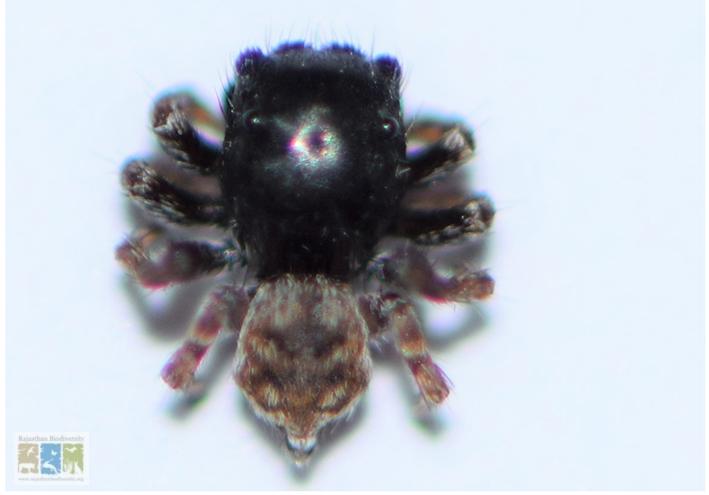
Nature is home to countless small creatures that often go unnoticed, and many of them are still unknown to science. Spiders are among these overlooked animals. Although thousands of spider species have already been described worldwide, researchers continue to discover new ones every year, showing that our knowledge of biodiversity is still far from complete. One such discovery comes from the Aravalli Hills of Rajasthan, one of the oldest mountain ranges in the world. During a spider survey in Sajjangarh Wildlife Sanctuary, Udaipur, researchers discovered a previously unknown jumping spider that was later described as Langelurillus udaipurensis. This finding is particularly significant because it represents the first scientific record of the genus Langelurillus from Rajasthan. Beyond adding a new species to science, the discovery also highlights how much remains to be learned about the rich but still poorly documented micro-biodiversity of the Aravalli landscape.
Langelurillus udaipurensis belongs to the family Salticidae, commonly known as jumping spiders. With more than 6,500 described species (World spider catalog 2026), Salticidae is the largest family of spiders in the world. Members of this family are best known for their remarkable eyesight and active hunting behaviour. Unlike web-building spiders, jumping spiders do not rely on silk to trap prey. Instead, they use their excellent vision to locate insects, carefully approach them, and capture them with a precise jump. Their large forward-facing eyes provide sharp vision, allowing them to judge distance accurately before attacking. This combination of keen eyesight, agility, and hunting skill makes jumping spiders one of the most fascinating and widely studied groups of spiders.
Langelurillus is a small genus of ground-dwelling jumping spiders. Most species are found in Africa, while only a few have been recorded from India. According to the current classification, the genus includes 23 recognised species worldwide. The first confirmed record of Langelurillus from India was published in 2017, when two new species were described from Maharashtra. Since then, additional species have gradually been discovered, expanding the known distribution of the genus in the country. By 2026, five species of Langelurillus had been reported from India (Fig. 1), with Langelurillus udaipurensis being one of the most recent additions.
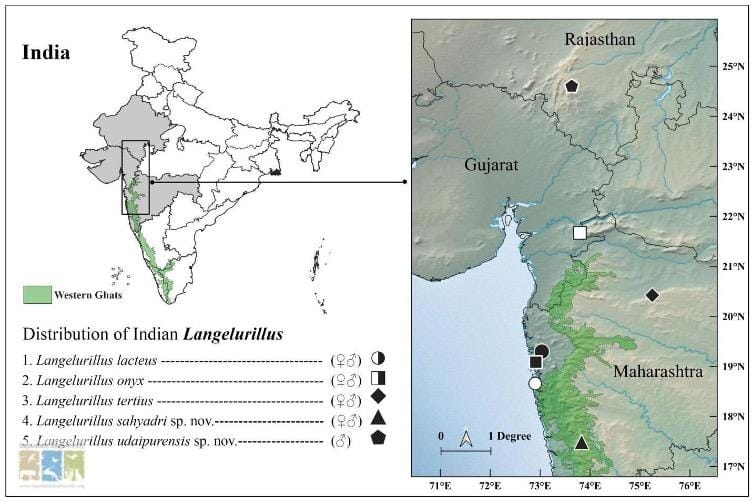
Fig. 1. Known distribution of the genus Langelurillus in India.
A New Species from Rajasthan
In June 2024, a field survey on spider diversity was carried out in Sajjangarh Wildlife Sanctuary, Udaipur, Rajasthan. During the survey, researchers collected a small ground-dwelling jumping spider that appeared to belong to the genus Langelurillus. To confirm its identity, the specimens were examined under a stereomicroscope and carefully compared with all known species of Langelurillus. The detailed morphological study revealed several unique features, particularly in the structure of the male palp, confirming that the spider represented a species new to science. The new species was named Langelurillus udaipurensis, with the specific name ‘udaipurensis’ referring to Udaipur, the district where it was discovered.
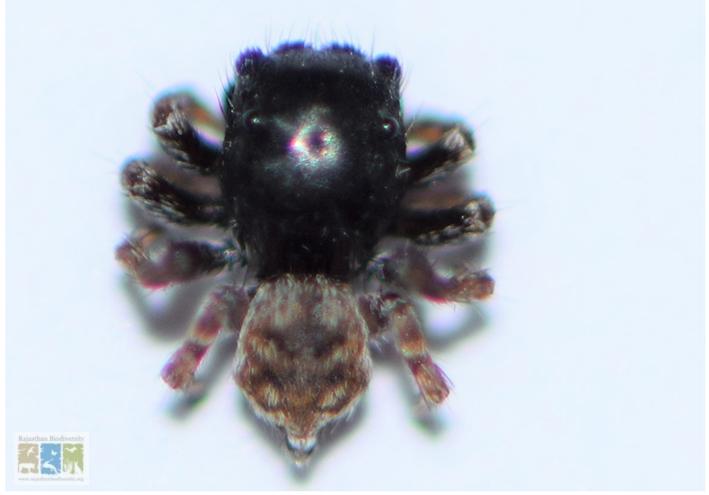
Fig. 2. Langelurillus udaipurensis (Male)
It is a tiny spider, measuring only 4–5 mm in length. It has a dark brown to black body covered with fine white and pale-yellow hairs, giving it a distinctive appearance (Figures 2 & 3). However, its most important identifying features are far too small to be seen with the naked eye. Like all male spiders, this species has a pair of specialised structures called palps, located near the mouthparts. Although they resemble small legs, these organs play an important role during reproduction. Their shape is unique to each species, making them one of the most reliable features for spider identification.
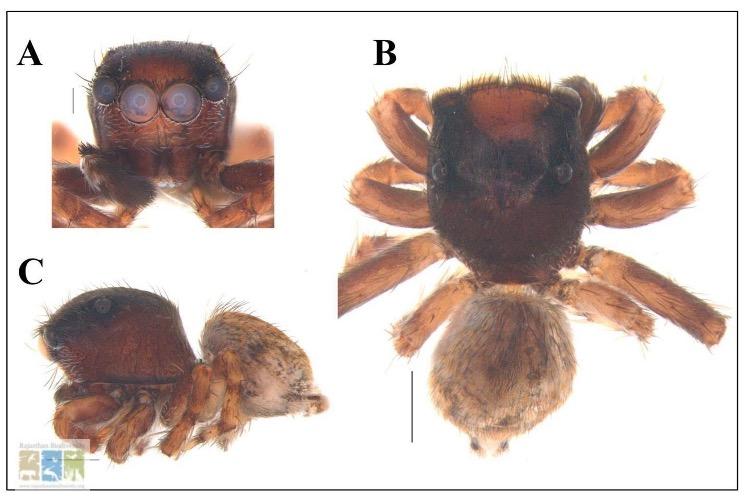
Fig. 3. Langelurillus udaipurensis (Male) showing the frontal (A), dorsal (B), and lateral (C) views.
In Langelurillus udaipurensis, three parts of the male palp are especially important: Retrolateral Tibial Apophysis (RTA), Embolus, and Tegulum (Figure 4). The RTA is a small spine-like projection on the palp, Embolus is a thin tube through which sperm is transferred during mating, and Tegulum is the rounded part of the palp that stores sperm. The shape and arrangement of these structures clearly distinguish Langelurillus udaipurensis from its closest relatives. So far, only the male of this species has been discovered. The female remains unknown, and future field surveys may provide new information about its natural history, evolution, morphology, and distribution.
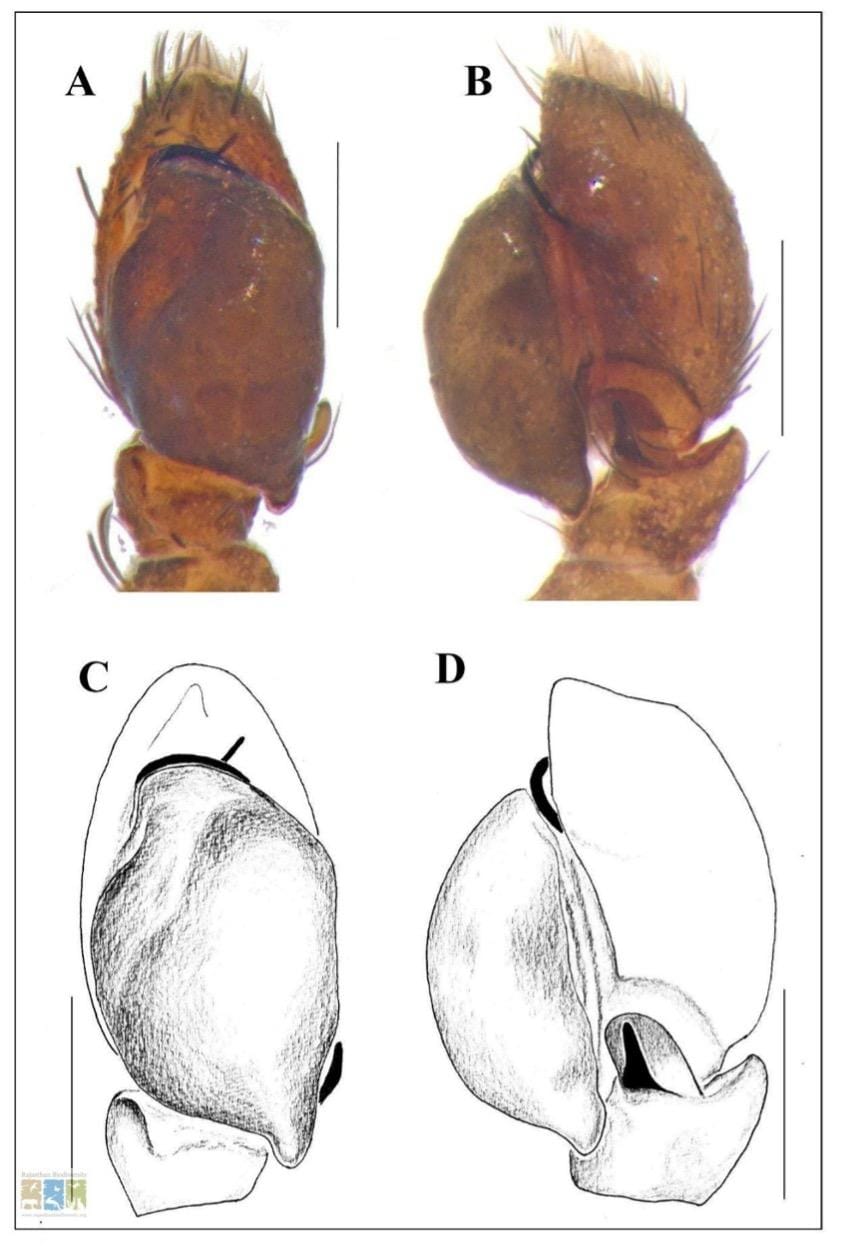
Fig. 4. Palp of Langelurillus udaipurensis showing the ventral (A, C) and retrolateral (B, D) views.
Natural History
Langelurillus udaipurensis has been recorded only from Sajjangarh Wildlife Sanctuary in Udaipur. The spider was discovered in rocky areas of the sanctuary, where patches of dry grass, leaf litter, and sparse vegetation create a mosaic of small microhabitats (Figure 5). Although these places may appear barren at first glance, they provide ideal shelter and hunting grounds for many tiny ground-dwelling spiders. During field surveys, the spider was observed actively moving over rocks during daylight hours, indicating that it is a diurnal species. Like most jumping spiders, it relies on its exceptional eyesight rather than a web to locate and stalk prey. Its dark body and fine covering of hairs blend well with the surrounding rocks, dry leaves, and soil, making it difficult to detect unless observed carefully.
The rocky habitat of Sajjangarh Wildlife Sanctuary also supports several other jumping spiders, including species of Langona, Orientattus aurantius, Stenaelurillus arambagensis, and Stenaelurillus vyaghri. The presence of these species suggests that the sanctuary provides suitable environmental conditions for a diverse assemblage of ground-dwelling salticid spiders. Despite its recent discovery, much about Langelurillus udaipurensis remains unknown. Its feeding habits, breeding behaviour, life cycle, seasonal activity, and ecological interactions have not yet been studied in detail. Future field investigations will help reveal how this tiny predator survives in the rocky landscapes of the Aravalli Hills and whether it occurs beyond its currently known locality.
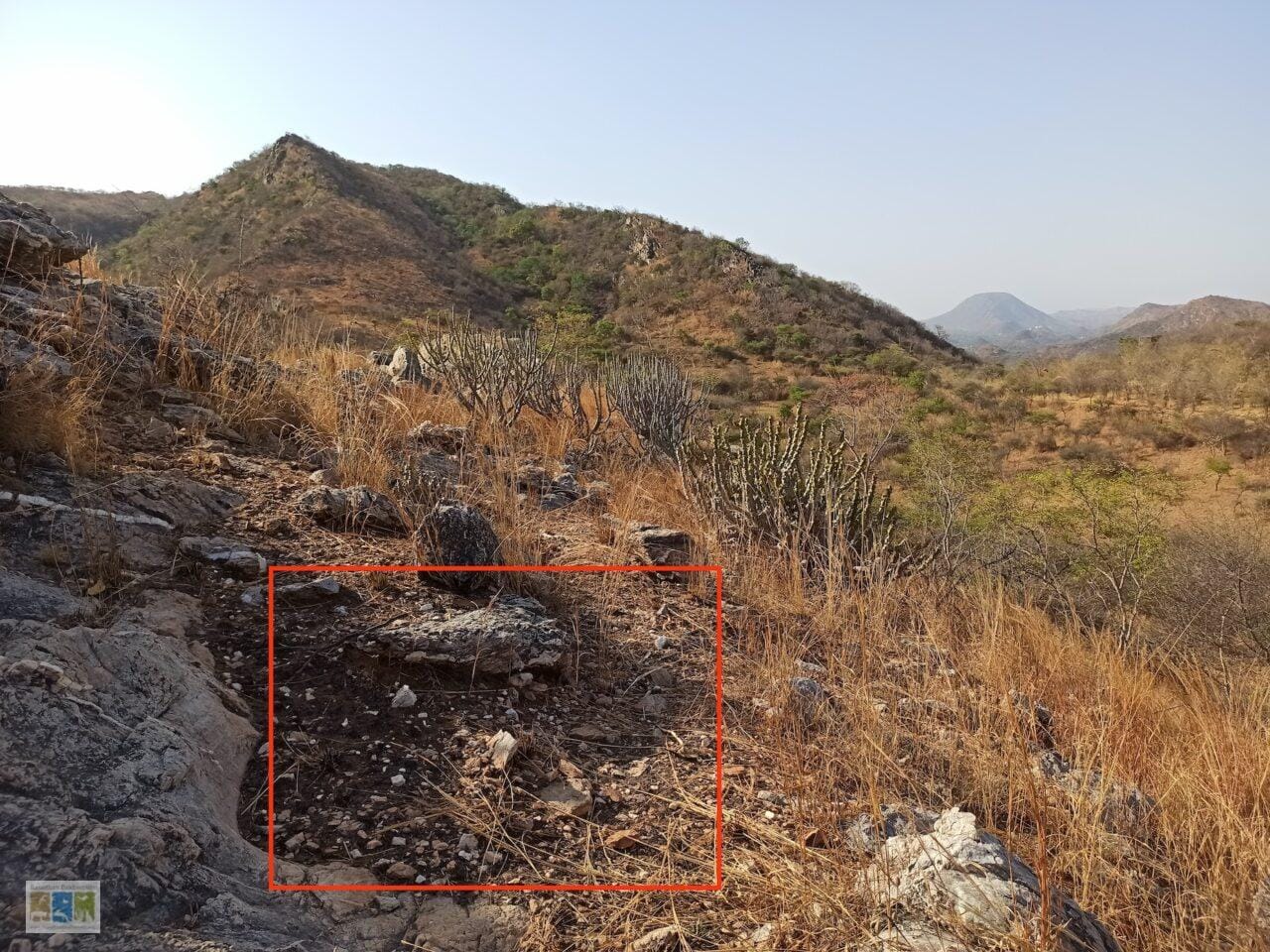
Fig. 5. Rocky habitat with dry grass, leaf litter, and sparse vegetation in Sajjangarh Wildlife Sanctuary, Udaipur, where Langelurillus udaipurensis was discovered.
The discovery of Langelurillus udaipurensis is important because it represents the first record of the genus Langelurillus from Rajasthan. It also highlights how much remains to be discovered in the Aravalli Hills, where even small and well-hidden animals continue to be found through careful field surveys. Each new species adds to our understanding of India’s biodiversity and emphasises the importance of conserving natural habitats while continuing to explore them.
References: Sanap, R. V., Tripathi, R., Caleb, J. T. D., Koli, H., Koli, V. K., Intodia, A., & Thackeray, T. (2026). Further notes on Indian Langelurillus Próchniewicz, 1994 (Araneae: Salticidae), with the description of two new species. Zootaxa, 5792(1), 183–199. https://doi.org/10.11646/zootaxa.5792.1.11
World Spider Catalog (2026) World Spider Catalog. Version 26. Natural History Museum Bern, Bern. Available from: http://wsc.nmbe.ch (accessed 12 December 2026) https://doi.org/10.24436/2
Discussion
No comments yet — start the conversation below.