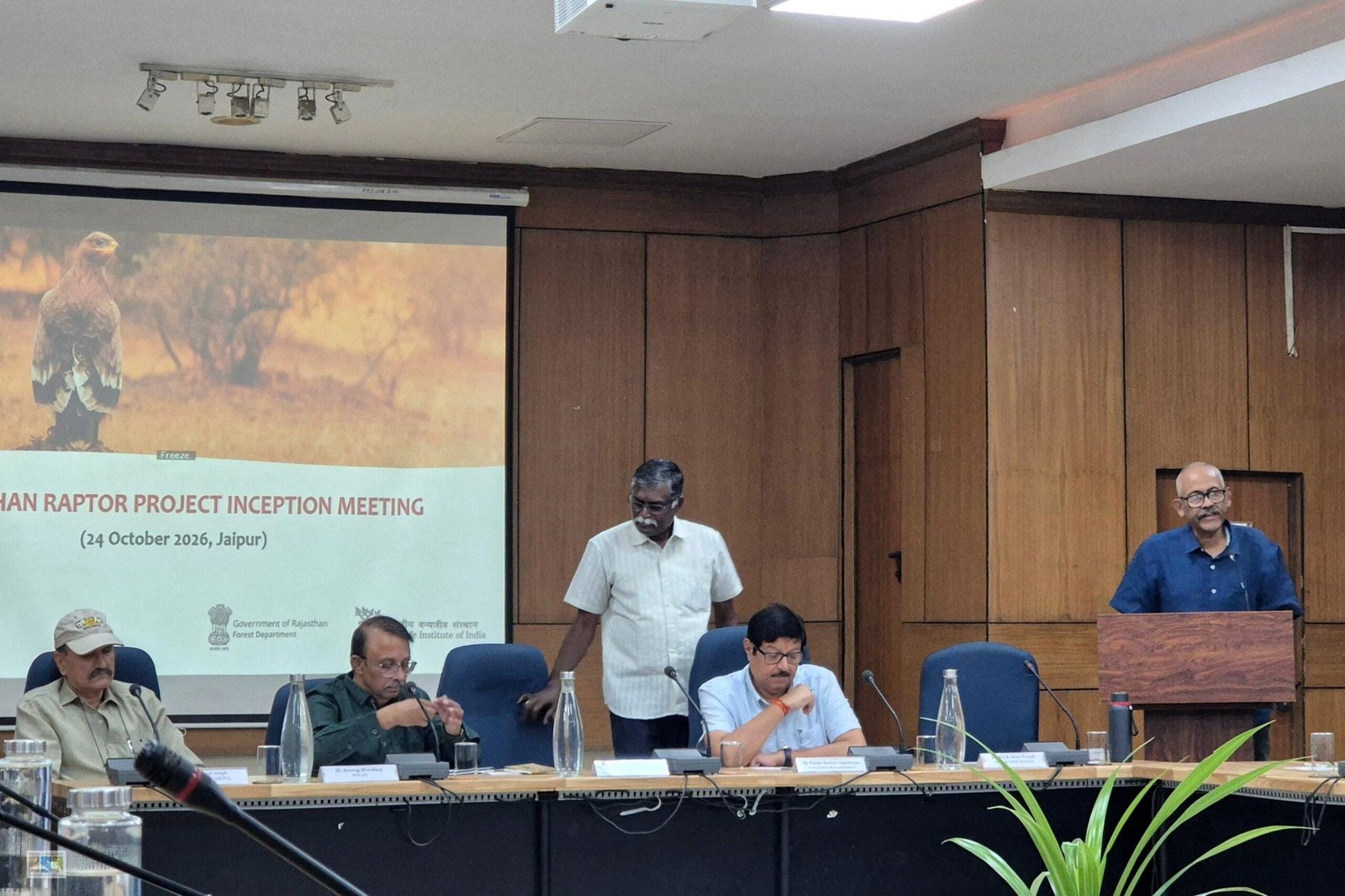
The Rajasthan Forest Department and the Wildlife Institute of India have launched the Rajasthan Raptor Project, a three-year study of the vultures, eagles, falcons and other birds of prey that make Rajasthan India’s richest raptor state.
Rajasthan has set out to understand its birds of prey as never before. On 24 October 2026, the Rajasthan Forest Department held the inception meeting of the Rajasthan Raptor Project, or Project Raptor, at the Forest Training Institute (FTI), Jaipur.
Senior forest officers, scientists of the Wildlife Institute of India (WII) and conservation organisations spent the morning on the project’s goals, methods and priorities. The common thread was simple: raptors range far beyond any single protected area, so protecting them needs sound science, regular monitoring and partnership.
Why Rajasthan matters for raptors
The project team described Rajasthan as the “raptor capital of India”. Of the 76 raptor species recorded in India, about 50 occur in Rajasthan, and Tal Chhapar Wildlife Sanctuary alone has recorded 40.
The state is a gateway on the western flyway for migratory birds. Every winter it hosts some of the country’s largest gatherings of migrant raptors, including Steppe Eagles and Eurasian Griffons. Raptors also hold a place in the state’s culture and religious traditions.
The resident list shared at the meeting includes the Shikra, Laggar Falcon, Red-necked Falcon, Indian, White-rumped, Red-headed and Egyptian Vultures, Tawny Eagle and Bonelli’s Eagle. Winter visitors range from harriers and kestrels to the Cinereous and Himalayan Vultures and the Greater Spotted, Imperial and Steppe Eagles.
The Rajasthan Raptor Project at a glance
- Title: Integrating Movement Ecology, Nesting Dynamics and Population Connectivity of Vultures and other Raptors in Rajasthan
- Duration: 36 months, October 2026 to September 2029
- Implementing agencies: Wildlife Institute of India; Rajasthan Forest Department
- Project investigators: Dr R. Suresh Kumar, Dr Ashish Jha, Dr Amarjeet Kaur and Mr Varun Kher (WII)
- Project advisors: Dr G.S. Bhardwaj, IFS, Director, WII; Shri K.C.A. Arun Prasad, IFS, APCCF and Chief Wildlife Warden, Rajasthan
What the Rajasthan Raptor Project will study
The project has seven objectives, all feeding into a Rajasthan Raptor Atlas and statewide hotspot maps.
- Hotspots: map raptor hotspots across the state by combining field surveys with citizen-science data, and check their overlap with power lines and other linear infrastructure.
- Nesting: study nesting, breeding success and habitat use of resident raptors, with a focus on the Indian Vulture.
- Carcass dumps: assess the numbers and seasonal patterns of migratory raptors at major carcass dumping sites, and how food supply shapes them.
- Movement: track selected migratory and resident raptors using telemetry and stable isotopes.
- Grasslands: study grassland raptors such as the Laggar Falcon, Red-necked Falcon, Tawny Eagle and Pallid Harrier, and their reliance on prey like the spiny-tailed lizard.
- Genetics: examine population structure and connectivity through genetic analysis.
- People: work with forest staff, municipal bodies and local communities through workshops and consultations.
The team presented this as a three-pillared workflow. Field ecology covers objectives 1, 2, 3 and 5, while a technology pillar adds telemetry, next-generation sequencing and stable isotope analysis.
Opening session
Shri K.C.A. Arun Prasad, IFS, APCCF and Chief Wildlife Warden, opened the meeting. Shri Arijit Banerjee, IFS, PCCF and Head of Forest Force, delivered the keynote. He described the project as a joint effort of the Forest Department and WII to make raptor conservation in the state more effective.
In his keynote, Shri Banerjee noted that many organisations working on raptors have so far worked in silos, and that the project should bring their efforts under one umbrella. He also observed that although veterinary diclofenac is banned, human-use diclofenac remains widely available and is still misused on livestock.
Senior officers present included Shri Pawan Kumar Upadhyay, PCCF (Administration); Shri Anurag Bhardwaj, PCCF (Planning); Shri Rajesh Gupta, APCCF; Shri Anoop K.R., CCF; and Deputy Conservators of Forests from across the state.
Conservation organisations were well represented. They included Shri Rajpal Singh, member of the Standing Committee of the State Board for Wildlife; WWF-India; Dr Dharmendra Khandal of Tiger Watch; and the Rajasthan Biodiversity Network.
Two decades of vulture conservation
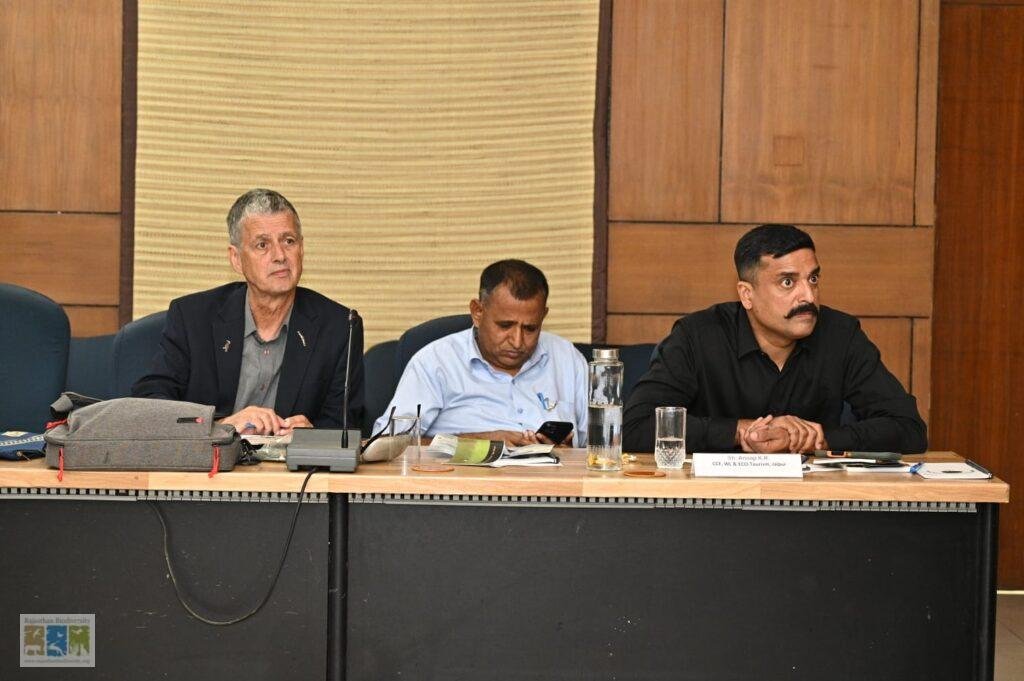
Dr Chris Bowden, Programme Manager at the RSPB, reviewed twenty years of vulture conservation in the Indian subcontinent. He stressed identifying the threats vultures face, strengthening regular monitoring and designing targeted, evidence-based action.
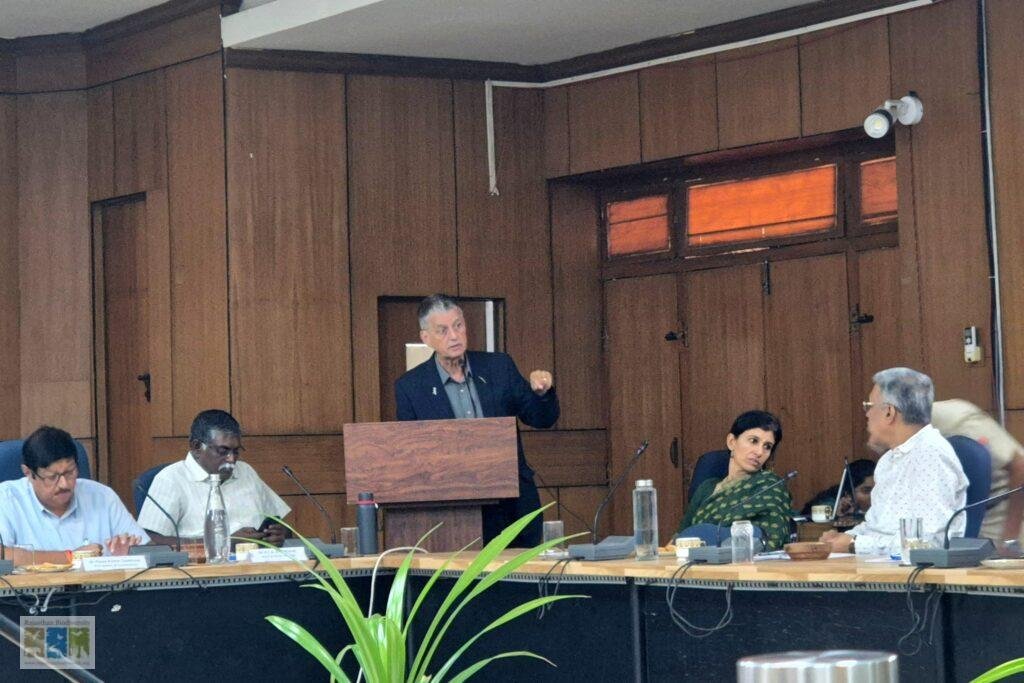
Dr Bowden, who has worked on Asian vultures for 22 years, said the future of vultures “is all about India, and Rajasthan is one of the most important states within India for that.” Of the world’s 23 vulture species, nine occur in India, and all nine have been recorded in Rajasthan.
Estimates of India’s vulture population in the early 1990s range from 20 million to 120 million birds. The White-rumped Vulture has since declined by 99.9 per cent. Diclofenac was an “invisible threat,” he explained, because a poisoned vulture seems healthy for 24 to 36 hours. In that time it can fly 40 to 50 km before dying, far from the carcass that poisoned it. He described the 2006 order by the Drug Controller General of India banning veterinary diclofenac as probably the single step that has saved more vultures than any other.
India’s four vulture breeding centres now hold well over 700 birds of three species, and releases have begun. In Nepal, diclofenac and nimesulide have been removed from use and vultures have recovered strongly. Nepal has closed its breeding centre and released all 69 of its White-rumped Vultures. Answering a question from the floor, Dr Bowden credited this recovery to intensive grassroots work and a scheme that swapped diclofenac for the safe alternative, meloxicam.
The painkillers that kill vultures
Veterinary painkillers remain at the heart of the story. Gyps vultures suffer fatal kidney failure, seen as visceral gout, after feeding on carcasses of cattle treated with certain NSAIDs. Diclofenac, confirmed as highly toxic in 2003, was the main cause of the collapse of Asian vulture populations.
India banned veterinary diclofenac in 2006 and limited human-use vials to 3 ml in 2015. The CMS Vulture Multi-species Action Plan still lists NSAID poisoning first among threats in South Asia, ahead of poison baits and collision and electrocution on power lines. A table shown at the meeting summed up where common veterinary NSAIDs stand.
| Drug | Risk to vultures | Status in India (as presented) |
|---|---|---|
| Meloxicam | Safe (Swarup et al. 2007) | In use; the recommended safe alternative |
| Tolfenamic acid | Safe (Chandramohan et al. 2022) | In use |
| Carprofen | Toxic at high doses | In use |
| Flunixin | Toxic; linked to vulture deaths in Spain and Italy | Not yet banned; trials planned |
| Nimesulide | Confirmed toxic | Banned December 2024 |
| Aceclofenac | Confirmed toxic; converts to diclofenac in cattle | Banned August 2023 |
| Ketoprofen | Confirmed toxic | Banned August 2023 |
| Diclofenac | Confirmed highly toxic | Banned 2006; human vials limited to 3 ml in 2015 |
Several other painkillers are licensed and widely used in Indian veterinary practice but not yet fully safety-tested on vultures. These include paracetamol, phenylbutazone, metamizole, piroxicam and ibuprofen.
Dr Bowden saw several openings for the project:
- Tracking good numbers of vultures in Rajasthan would update what is known about current causes of death.
- Sampling cattle carcasses would show which drugs are really in use. Rajasthan has recorded some of India’s highest levels of toxic NSAIDs.
- Undercover pharmacy surveys offer a cheaper first check.
- The Department could consider establishing a Vulture Safe Zone, an area of 100 km radius certified free of toxic drugs. The last national action plan aimed for one in every state, but Rajasthan has none yet.
Counting raptors, mapping hotspots
Dr Ashish Jha, Scientist C at WII, called Rajasthan “the guardian of raptors.” At certain times of year, he said, 50 to 80 per cent of a species’ global population may pass through the state. Tracking of 40 harriers shows Montagu’s and Pallid Harriers funnelling through the Thar, and Laggar Falcon records are concentrated in Rajasthan. “Anything that happens in the Thar would have repercussions across the global population,” he said.
He then explained how the team will assess populations and map hotspots. A decade of eBird checklists, plotted on a 144 sq km grid, shows how unevenly Rajasthan has been surveyed. Well-sampled cells are concentrated in the east and centre, while about 80 per cent of the state has fewer than 15 checklists in that time.
To fill these gaps, the team will combine four field methods:
- Road transects of 5 km, driven at 20 km/h over about 15 minutes
- Counts from permanent vantage points, 30 minutes each
- Territory mapping and nest counts
- Roost counts
Survey design will also allow for the wide size range of raptors, from kestrels under 200 g to vultures over 3 kg. Following earlier studies by Tiwari and colleagues, it will favour point counts over strip transects in open habitats and correct for time-of-day bias.
When migrant and resident birds of the same species mix in winter, a big influx can hide a decline in residents. So the team will also count nests in the breeding season. To close the survey gaps, the team plans two-day workshops across the state for schools, colleges and the public: one day on identification, one day of raptor watching. “Even if we train 100 people and 10 of them over time become bird watchers, that would be a big contribution,” he said.
Carcass dumps, dogs and drugs
Mr Varun Kher, Scientist C at WII, spoke on carrion ecology in a changing landscape. His talk covered how raptors scavenge at carcass dumps, how free-ranging dogs compete with them for food, and the risk of NSAID exposure for scavengers in Rajasthan.
Mr Kher has worked in Rajasthan for eight years, mostly on the Great Indian Bustard, and on scavengers in Jaisalmer for the last three. Vultures in Rajasthan feed mainly on livestock, inside and outside protected areas, so their conservation “cannot be restricted to PAs alone.”
His team monitored about 100 carcasses in Jaisalmer, and the early results were striking:
- Vultures and migratory eagles visited about a quarter of carcasses or fewer, and resident scavengers fewer still.
- Free-ranging dogs fed at 65 per cent.
- Pigs, which reached the desert only after the canal, fed at 70 per cent. Where dogs and pigs feed, they leave almost nothing for other species.
Toxic drugs are still on sale. A pharmacy survey published last year found diclofenac being sold at 25 per cent of pharmacies surveyed in Rajasthan in 2024, flunixin at 21 per cent, ketoprofen at 11 per cent and nimesulide at 9 per cent. Around Desert National Park, nimesulide use fell from about 30 per cent to 5–6 per cent after its ban. “Something will replace this drug,” Mr Kher cautioned, “and we need to ensure the replacement is a safe drug, not a harmful one.”
Lesser raptors and the Central Asian Flyway
Dr R. Suresh Kumar, Scientist F at WII, introduced the Rajasthan Raptor Project, its planned activities and expected results. He made the case for systematic population assessments and for studying how raptors move, use habitat and connect across populations, so that management rests on evidence.
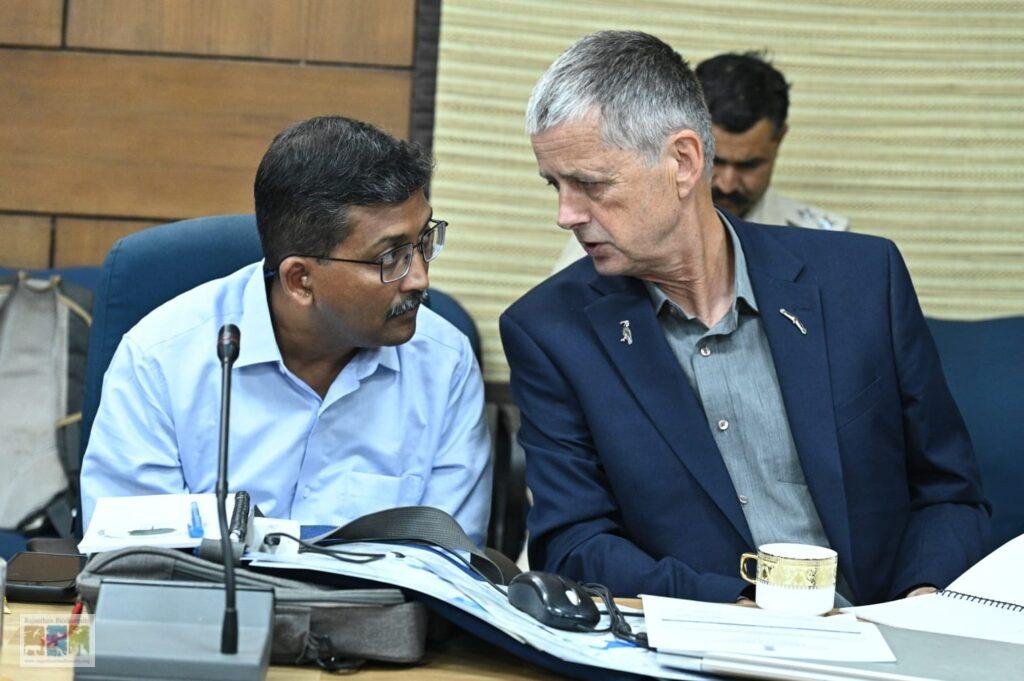
Dr Suresh Kumar was realistic about what to expect. The huge vulture gatherings of the past may never return, he said, because carcass disposal and sanitation have changed so much. A recent nationwide WII assessment found that nearly 72 per cent of historically occupied vulture nesting sites are no longer in use. Many remaining sites, especially of the White-rumped Vulture, lie outside protected areas. At Sathyamangalam Tiger Reserve in Tamil Nadu, where a small population still lives on wild prey, “tiger conservation is actually vulture conservation.”
Why the timing is right
The timing is ideal, he said. The Environment Ministry has asked WII to prepare a national raptor action plan, and the national vulture action plan, which expires this year, is being revised. “Ideally, there should be a national raptor project,” he said, “but Rajasthan is taking the lead.”
He contrasted two carcass dumps. At Keru near Jodhpur, much of each carcass goes to chicken feed and vultures get little. At Jodbeed near Bikaner, plenty of flesh is left for them. A trained network of citizen volunteers will be central to the work; so far, only Tamil Nadu has built one for a statewide assessment.
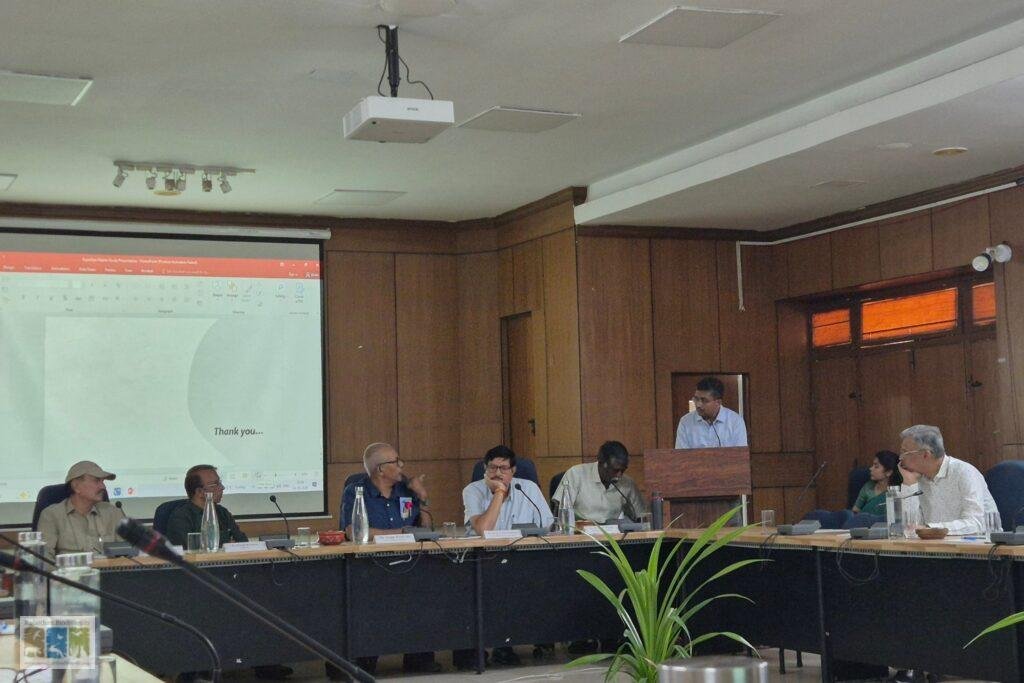
Responding to the presentation, Shri Arijit Banerjee said the volunteer network would be the most critical part. “It is not one man’s job,” he said. If a tagged bird’s signal stops moving, a team must be ready to rush to the spot, as is done for tigers and cheetahs. He urged collaboration with neighbouring states and sustained observation: “Watch scientifically. It can’t be a random, episodic record.”
In two further talks, Dr Suresh Kumar spoke on lesser raptors, the smaller and often overlooked hawks, falcons and harriers, and on tracking migratory raptors along the Central Asian Flyway. Telemetry, stable isotopes and genetics will together show how birds move within the state and how Rajasthan’s raptors link to populations along the flyway.
Groundwork already in place
WWF-India, working with the Forest Department, shared results from a statewide raptor assessment already under way. It has covered 50 districts and 67 protected areas and conservation reserves, recording 45 raptor species, 10 of them threatened.
The assessment has identified 22 priority raptor grids and regularly monitors 124 prioritised vulture nests. More than 171 forest personnel have been engaged, and three priority orans, community-protected sacred groves, have been assessed in Jaisalmer.
It proposes three conservation pillars: key raptor areas, raptor-safe landscapes and community stewardship.
- Key raptor areas: Desert National Park and Ranthambhore Tiger Reserve
- Priority monitoring sites: Tal Chhapar Wildlife Sanctuary, Jodbeed Conservation Reserve, Keoladeo National Park, Mukundara Hills Tiger Reserve and Beed Jhunjhunu
- Community stewardship: priority orans in Jaisalmer, Jodhpur and Bikaner
- Vulture nesting sites: Chambal–Bhainsrorgarh, Bayana and the Mukundara region
- Threats to map and reduce: electrocution hotspots and toxic-NSAID hotspots
WWF-India said its raptor programme now runs in four states. Its representative urged closer work with the Animal Husbandry Department and municipal bodies, since free-ranging dogs compete with vultures at carcass dumps. During a recent livestock vaccination drive near Mukundara, WWF-India reached more than 100 households and found that none had access to veterinary services.
Messages from partners and the discussion
Dr Munir Virani, Chief Operating Officer of the Mohamed bin Zayed Raptor Conservation Fund, sent a video message on why raptor research and conservation are urgently needed.
Dr Virani recalled that India lost more than 95 per cent of its vultures within a few years in the 1990s. He said the 2006 diclofenac ban “changed the game for vulture conservation.” He called Rajasthan “one of the last strongholds for raptors in this part of the world,” where Indian Vultures still nest on the cliffs of Ranthambhore and along the Chambal.
“What we don’t know yet is where these birds go, where they breed and what’s killing them along the way,” he said. “That’s the gap that this project fills.” Eighty birds will carry tracking devices, nests will be watched season after season, and carcass sites will be counted. That evidence will help Rajasthan protect its raptors, “whether that means redirecting a power line or cleaning up feeding sites,” and could make the project “a model for the entire country.”
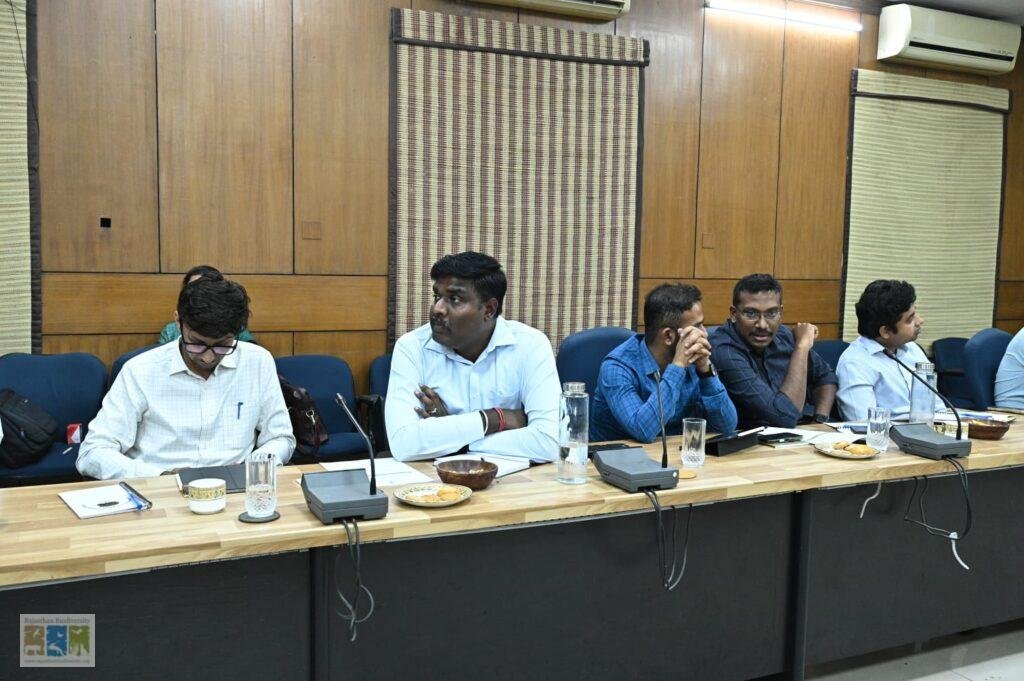
The open discussion turned to practical challenges and to closer coordination between the Forest Department, research institutions and conservation organisations. Speakers stressed that field research, regular ground monitoring and coordination between departments must work together to produce lasting results.
What the Rajasthan Raptor Project aims to deliver
By September 2029, the project expects to deliver:
- A Rajasthan Raptor Atlas, the first comprehensive picture of the state’s raptors
- Movement and landscape-use data for a large number of raptor species
- Capacity building for forest staff and other stakeholders
- Policy guidelines on managing landscapes for raptor conservation
- A baseline to guide the National Action Plan for Vulture Conservation and Central Asian Flyway work
- A baseline for vulture reintroduction guidelines and Vulture Safe Zone management
- A long-term raptor monitoring system for the state
Raptors of Rajasthan for every participant
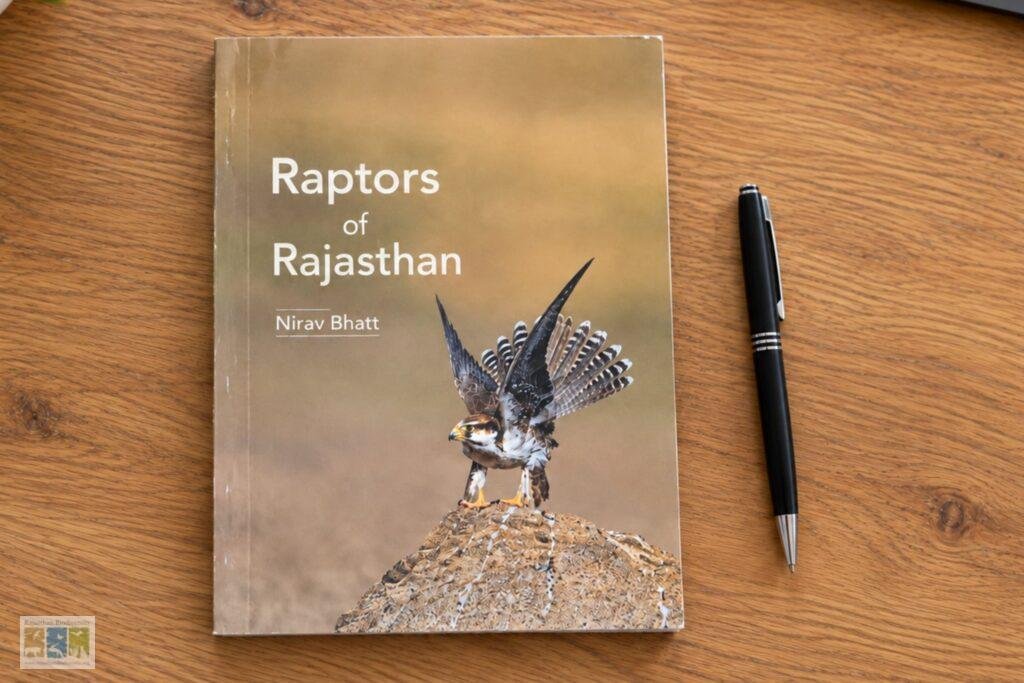
Copies of Raptors of Rajasthan by Nirav Bhatt, from the Rajasthan Biodiversity Network, were shared with participants. The field guide brings together the state’s birds of prey and should serve as a handy companion for the forest staff, researchers and naturalists who will carry this project into the field.
What comes next for the Rajasthan Raptor Project
With the inception meeting done, Project Raptor now moves to the field, where it will run until September 2029. Rajasthan holds about two-thirds of India’s raptor species, so what the project learns here will matter well beyond the state’s borders.
The Rajasthan Biodiversity Network will follow the project’s progress and share its findings with our readers.
Sources
- Programme schedule and presentations, Project Raptor inception meeting, Forest Training Institute, Jaipur, 24 October 2026
- ETV Bharat Rajasthan, Project Raptor launched in Rajasthan (in Hindi), 24 October 2026
Discussion
No comments yet — start the conversation below.