पोर्टिया मकड़ियाँ एक छोटी जंपिंग स्पाइडर है। जो साल्टिसिडे परिवार से संबंधित हैं। ये मकड़ी सबसे बुद्धिमान आर्थ्रोपॉड में से एक हैं। क्योंकि पोर्टिया मकड़ियाँ शिकारी का शिकारी करती हैं। वह तभी संभव है जब आप जटिल शिकार रणनीतियों की योजना बनाने और उन्हें क्रियान्वित करने माहिर हो। कुछ मकड़ियां अपने रेशम का जाला बनाकर इंतज़ार करती है, परंतु यह पोर्टिया मकड़ियाँ सक्रिय शिकारी होती हैं जो अपने शिकार का पीछा करती हैं और उस पर झपट्टा मारती हैं। देखा गया है की जब इस मकड़ी को एक जाला बनाने वाली मकड़ी मारनी होती है, तो वह उसे झांसा देकर अपने पास बुलाती है। यह उसके जाले में अपनी पतली टांगों से एक कंपन पैदा करती है, यह जाले वाली मकड़ी को लगता है कोई कीट उसके जाले में फंसा है।जाले वाली मकड़ी छिपे स्थान से बाहर आती है और फिर यह उस पर हमला कर देती है। इसके अलावा पोर्टिया प्रजातियाँ सामाजिक व्यवहार प्रदर्शित करने के लिए जानी जाती हैं जो आमतौर पर इन साल्टिसिडे मकड़ियों में नहीं देखी जाती हैं। यह मकड़ी मुझे सवाई माधोपुर (राजस्थान) में देखने को मिली।
सबसे बुद्धिमान आर्थ्रोपॉड में से एक मकड़ी (फोटो: धर्मेन्द्र खांडल)
पोर्टिया मकड़ियाँ सक्रिय शिकारी होती हैं जो अपने शिकार का पीछा करती हैं और उस पर झपट्टा मारती हैं (फोटो: प्रवीण)
कई विवादों और शंकाओं के बीच भारत देश में अब चीता को पुनः स्थापित किया जाने वाला हैं। राजस्थान राज्य के कुछ क्षेत्र भी इसके लिए उपयुक्त माने गए हैं। परन्तु क्या आप जानते हैं की राजस्थान में अंतिम चीता कहाँ और कब पाया जाता था ?
इसे जानने के लिए हमें भारत के एक महान प्रकृतिवादी इतिहासकार श्री दिव्यभानु सिंह के एक लंबे शोध पत्र को सूक्ष्मता से देखना होगा जो उन्होंने एक युवा शोधार्थी रजा काज़मी के साथ बॉम्बे नेचुरल हिस्ट्री सोसाइटी के जर्नल -JBNHS 2019 में प्रकाशित किया हैं।
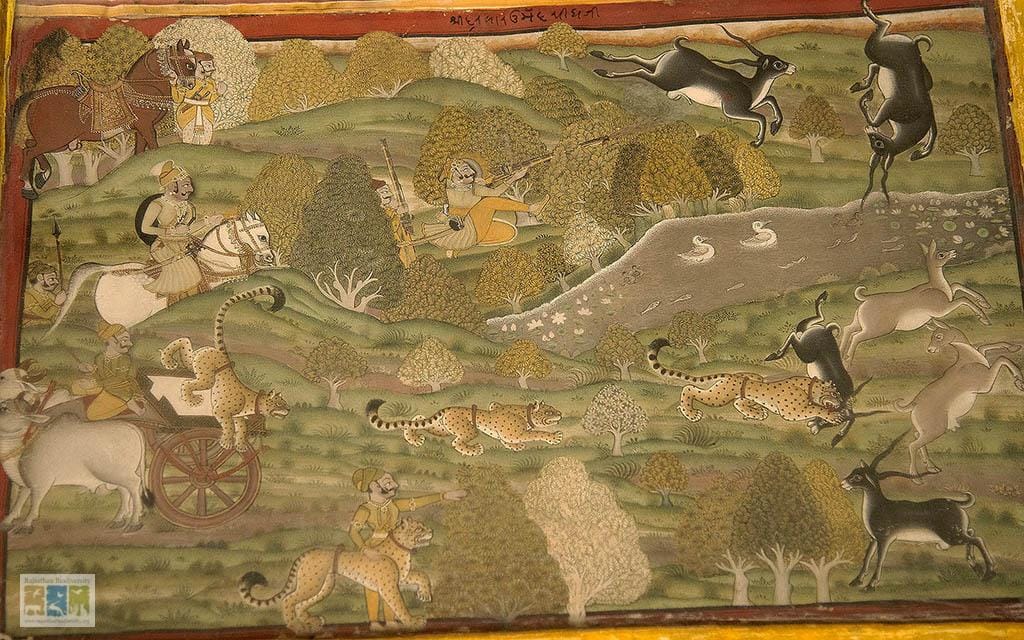
A fresco painting in Bundi .
इस शोध पत्र में ईस्वी सं 1772 से भारत और पाकिस्तान से चीता के 199 रिकॉर्ड समाहित किये हैं। यानी पिछले लगभग 250 वर्षो में चीता से संबंधित अधिकांश उद्धरण इस शोध पत्र में शामिल हैं। इन माहिर शोधकर्ताओं के अन्वेषण से शायद ही कोई चीता के रिकॉर्ड अछूते रहे होंगे।
यदि राजस्थान की बात करें तो इस शोध पत्र के अनुसार चीता के मात्र 12 रिकॉर्ड (टेबल 1) ही प्राप्त हुए है। इन रिकॉर्ड की समीक्षा करे तो देखेंगे की इन में 6 रिकॉर्ड गैर विशिष्ट प्रकार के हैं, यानी ऐसे रिकॉर्ड जो दर्शाते हैं कि भारत के कई राज्यों में चीता की उपस्थिति दर्ज की गयी हैं, जिनमें राजस्थान भी शामिल हैं, परन्तु ऐसे रिकॉर्ड एक स्थान विशेष को इंगित नहीं करते हैं जहाँ चीता देखा गया । यह रिकॉर्ड मात्र साहित्यिक विवेचना के क्रम में समाहित हुए है। जैसे की उदाहरण के लिए हम एक रिकॉर्ड लेते हैं – स्टेरनदेल, (Sterndale,1884) ने लिखा की चीता ” Central or Southern India, and in the North-West from Kandeish, through Scinde and Rajpootana to the Punjab,…… In India the places where it most common are Jeypur in Upper India, and Hyderabad in Southern India ” में पाया जाता है। इस रिकॉर्ड से यह सत्यापित नहीं होता की स्टेरनदेल ने किस तारीख को अथवा किस स्थान पर चीता देखा हैं।
बाकी बचे 6 रिकॉर्ड इन मे से 4 रिकॉर्ड पालतू चीता के दर्शाये गए हैं, जो भरतपुर, अलवर और जयपुर से प्राप्त हुए हैं। इन पालतू चीता के सन्दर्भ में प्रामाणिक तथ्य उपलब्ध नहीं हैं कि वह कहाँ से लाये गए है। राजस्थान के दो पूर्व वन्य जीव प्रतिपलाकों श्री विष्णु दत्त शर्मा एवं श्री कैलाश सांखला (1984) के अनुसार जयपुर में उपलब्ध सारे पालतू चीता अफ्रीका या काबुल, अफगानिस्तान से आते रहे हैं एवं श्री दिव्यभानुसिंह के अनुसार यह ग्वालियर (उन्हें अफ्रीका से आते थे, ऐसा प्रमाण नहीं मिला) से आते थे। अतः इन्हें किसी भी तरह राजस्थान का नहीं माना जा सकता हैं।
खैर अब बचे मात्र 2 प्रमाण जो राजस्थान के जंगली चीता होने के करीब हैं –
एक हैं प्रसाद गांव से जो दक्षिण उदयपुर में स्थित हैं। रिकॉर्ड धारक के अनुसार एक चीता रात में कैंप के करीब कुत्ते ढूंढ़ते हुए घूम रहा था। इस प्रमाण में दो संदेह पैदा होते हैं की क्या दक्षिण राजस्थान के घने जंगल चीता के लिए मुनासिब थे ? दूसरा की क्या चीता वाकई कुत्तों का शिकार करता रहा होगा? कहीं वह एक बघेरा/ तेंदुआ तो नहीं था जिसे चीता नाम से दर्ज कर लिया गया होगा ? क्योंकि दक्षिण राजस्थान में आज भी तेंदुआ को चितरा नाम से जाना जाता हैं।
दूसरा प्रमाण कुआं खेड़ा गांव से हैं जो कोटा जिले के रावतभाटा क्षेत्र का एक गांव हैं जो मध्यप्रदेश की सीमा पर स्थित हैं। यह निःसंदेह एक चीता के बारे में ही हैं, जिसे दुर्भाग्य से एक बाघ ने मौत के घाट उतार दिया था। इस रिकॉर्ड के संकलनकर्ता विलियम राइस एक अत्यंत माहिर शिकारी थे।
विलियम राइस 25 वी बॉम्बे रेजिमेंट में लेफ्टिनेंट पद पर थे और उन्होंने अपने शिकार के संस्मरण में लिखा है कि, किस प्रकार से उन्होंने पांच वर्षो के समय में 156 बड़े शिकार किये जिनमें 68 बाघ मारे एवं 30 को घायल करते हुए कुल 98 बाघों का शिकार किया, मात्र 4 बघेरे मारे एवं 3 घायल करते हुए कुल 7 बघेरे एवं 25 भालू मारे एवं 26 घायल किये और इस तरह कुल 51 भालुओं का शिकार किया। उन्हें लगता था कि, लोग उनके इस साहसिक कारनामे पर कोई विश्वास नहीं करेगा, इसलिए उन्होंने सात चश्मदीद अफसरों के नाम इस तथ्य के साथ में उल्लेखित किये हैं। यह अधिकांश वन्य प्राणी उन्होंने कोटा के वर्तमान में गांधी सागर, जवाहर सागर, राणा प्रताप सागर, बिजोलिया, मांडलगढ़, भेसरोडगढ़ आदि क्षेत्र से मारे थे।
A tamed cheetah in Alwar c. 1890
इस चीता के प्रमाण को संदेह से नहीं देखा जा सकता कि उन्हें इस प्राणी के बारे में पता नहीं था। यद्यपि, उन्हें स्वयं को भी संदेह हुआ की इस घने वन एवं पहाड़ी प्रदेश में यह प्राणी किस प्रकार आ गया जबकि यह मैदानी हिस्सों का प्राणी हैं।
हालांकि इस अंतिम प्रमाण पर भी संदेह किया जाता हैं की यह कोई पालतू चीता था जो भटक कर पहाड़ी क्षेत्र में आ गया हो ? क्योंकि कोटा एवं बूंदी राज्य के भित्ति चित्रों में पालतू चीता रखने के प्रमाण मिलते हैं। कई बार शिकार के दौरान चीता भटक कर खो जाते थे, एवं कभी मिल जाते थे कभी नहीं मिलते थे। शायद यह चीता भी इसी प्रकार का रहा हो।
इस तरह पूरे 250 वर्षो में यही प्रमाण जंगली चीता के सन्दर्भ में प्राप्त हुए हैं जो ईस्वी सन् 1852 में मिला था, यानी लगभग 170 वर्षों पहले हमारे राज्य में कोई चीता ऐसे जंगल में मिला था, जहाँ इस रिकॉर्ड धारक विलियम राइस के अनुसार वह नहीं हो सकता हैं।
S.no.
year
Place
Remarks
Reference
1
C. 1840
Bharatpur, Rajasthan
Coursing with Cheetah
Orlich, 1842
2
C.1852
Kooakhera (Kuvakhera), Rajasthan
One dead cheetah killed by a tiger
Rice, 1857
3
c. 1860
Jaipur, Rajasthan
Photograph of two cheetah with keepers
Fabb, 1986
4
28 December 1865
Pursad village, Rajasthan
Author sees a cheetah prowling near the camp in search of dogs
Rousselet and Buckie 1882
5
c. 1880
Sind, Rajputana, Punjab, Central, southern, and N.W. India.
Cheetah Reported
Murray, 1884
6
c. 1884
Central, Southern India, north-west from Khandesh through Sind and Rajputana to the Punjab, commonest in Jaipur and Hyderabad (in the Deccan)
Cheetahs reported
Sterndale, 1884
7
1889
Jaipur, Rajasthan
Coursing with Cheetahs
O’shea, 1890
8
1892-93
Alwar, Rajasthan
Tame Cheetahs seen
Gardner, 1895
9
1892
Punjab, Rajputana Central India up to Bengal
Cheetahs reported
Sanyal, 1892
10
c.1907
Central India, Rajputana, Punjab
Cheetahs reported
Lydekker, 1907
11
c.1920
Northern India, Punjab, Rajputana, Central India, Central Provinces, almost upto Bengal
Cheetahs reported
Burke, 1920
12
c.1932
Rajputana, Central India, Central Provinces, Punjab
Cheetahs reported
Alexander & Martin-Leake, 1932
References :-
Divyabhanusinh & R. Kazmi, ‘Asiatic Cheetah Acinonyx jubatus venaticus in India: A Chronology of Extinction and Related Report’, J. Bombay Nat. Hist. Soc 116, 2019. doi: 10.17087/jbnhs/2019/v116/141806
V. Sharma & K. Sankhala, ‘Vanishing Cats of Rajasthan’, in P. Jackson (ed.), The Plight of the Cats. Proceedings from the Cat Specialist Group meeting in Kanha National Park. IUCN Cat Specialist Group, Bougy-Villars, Switzerland, 1984, pp. 117-135.
W. Rice, Tiger-Shooting in India: Being an Account of Hunting Experiences on Foot in Rajpootana During the Hot Season, from 1850 to 1854. Smith, Elder & Co., London, 1857.
Divyabhanusinh, The End of a Trail: The Cheetah in India (2nd edn.) Oxford University Press, New Delhi, 2002.
Authors:
Dr. Dharmendra Khandal (L) has worked as a conservation biologist with Tiger Watch – a non-profit organisation based in Ranthambhore, for the last 16 years. He spearheads all anti-poaching, community-based conservation and exploration interventions for the organisation.
Mr. Ishan Dhar (R) is a researcher of political science in a think tank. He has been associated with Tiger Watch’s conservation interventions in his capacity as a member of the board of directors.
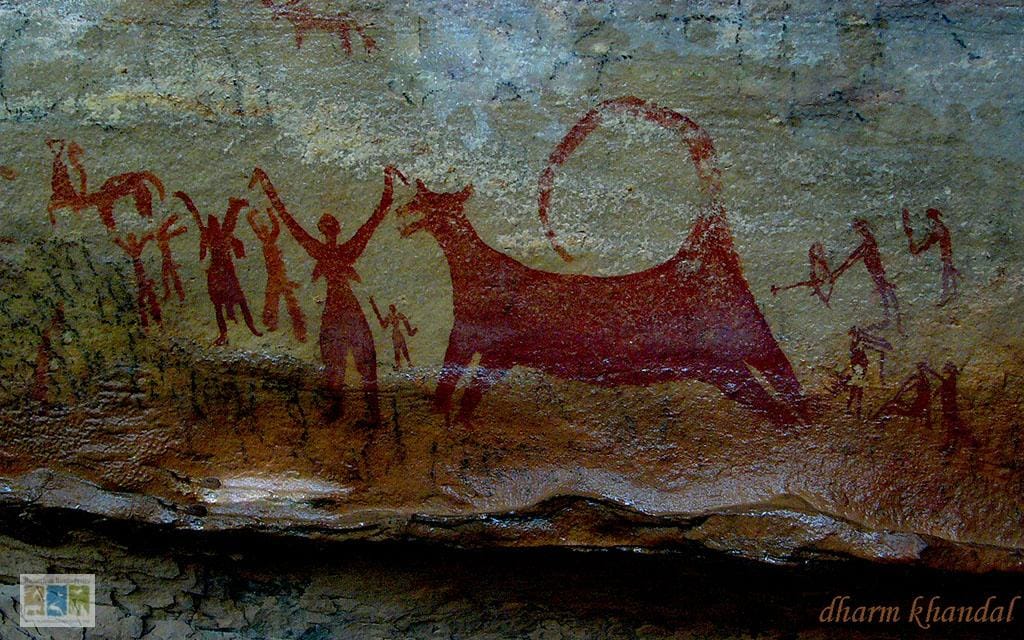
Cover photo caption & credit: Human-wildlife conflict is as old as mankind itself. A revealing cave painting from Bundi. (Photo: Dr. Dharmendra Khandal)
According to most experts, it is becoming increasingly evident that human-wildlife conflict is on the rise. Almost every other day, shocking videos and photographs of tiger attacks proliferate all over the media. There seems to be an overall consensus over the fact that conflict between humans and wildlife is increasing rapidly. However, no one ever bothers to ask that while the numbers of tigers and leopards have come down from the lakhs to the thousands, and with current populations only a meagre 5-10% of their erstwhile numbers, why is there an elevation in human-wildlife conflict? Some answer that given the exponential rise in the population of humans, perhaps the tiger’s prey base has also reduced, hence an increase in attacks. Well, let’s see what historical records have to tell us.
Rudyard Kipling, by John Collier, ca.1891. Despite changing times and outlooks, Kipling is still synonymous with the Indian jungle as a result of the popularity of The Jungle Book, adaptations of which continue to be immortalized in film.
One of the more unique historical records of human-wildlife conflict, was found in the town of Bundi in Rajasthan, and it was written by none other than the celebrated Victorian era British author and poet, Rudyard Kipling. Kipling was in fact, born in India. He also received the Nobel Prize for Literature at the relatively young age of 41, and is still the youngest individual to have ever won the prize. Most are familiar with his collection of fictional stories titled “TheJungle Book” , centered around a protagonist named Mowgli, and his interactions with different kinds of anthropomorphic wildlife in the central Indian jungle.
Kipling described his observations of the number of victims of tiger attacks recorded in a Bundi dispensary, all the while sparing the reader none of his trademark wit. He wrote that between 1887 -1889, he travelled through many parts of India, including Rajasthan, and whilst walking down a street in Bundi one afternoon, someone suddenly called out to him in “rusty” English, “Come, and see my dispensary”.
Bundi in the present. (Photo: Dr. Dharmendra Khandal)
This came as a bit of a shock to Kipling, for at the time, the only people said to be conversant in English in the whole town were two teachers at a local school. The unprecedented third, was a local doctor who had studied 20 years previously at the Lahore Medical College, and ran a charitable dispensary. However, the good doctor’s proficiency in English was not that of a first language speaker. The doctor proceeded to describe the different kinds of patients that visited him, and how his 16 bed dispensary functioned. According to Kipling, there was a crowd of some 25 -30 people, and he approved of the dispensary. The dispensary’s patient records were also written in English, where none of the ailments were spelled correctly (“Asthama, Numonia, Skindiseas, Dabalaty”), but also contained figures under a rather curious heading, “Loin-bite”. When Kipling asked the doctor what he meant by this, the latter responded in Hindi, “Sher se mara” (Kipling was fluent in Hindi, it was believed to be his first language). Following which Kipling humorously commented, ” it was ‘lion bite’ or tiger, if you insist upon zoological accuracy”. Both tigers, and leopards could have been behind the attacks, the chances of a lion being very slim for obvious reasons. According to Kipling, tigers used to injure approximately 3-4 people in Bundi every week. Today, this figure dwarfs the current figure for the entire state of Rajasthan, and bear in mind, this was just a small town.
It appears that as a consequence of the easy availability of cameras, and smartphones, an increasing number of videos and photographs of cases of human-wildlife conflict are rapidly proliferating in the media. Where there are humans and wildlife, conflict is inevitable, to learn the art of living with it is necessary. Indians, it must be said, know this art relatively well.
Today the jungles of Bundi have become tigerless, but the government is now paying attention to the area, and seeks to prepare it for the tiger’s return. With the unprecedented success of the adjacent Ranthambore Tiger Reserve, the residents of Bundi have also become aware of the benefits of tourism revenue, and eagerly await new tigers.
References:
Rudyard Kipling. (1899).“The Comedy of Errors and the Exploitation of Boondi,” in From Sea to Sea; Letters of Travel, vol. 1 (New York: Doubleday & McClure Company), 151.
Authors:
Dr. Dharmendra Khandal (L) has worked as a conservation biologist with Tiger Watch – a non-profit organisation based in Ranthambhore, for the last 16 years. He spearheads all anti-poaching, community-based conservation and exploration interventions for the organisation.
Mr. Ishan Dhar (R) is a researcher of political science in a think tank. He has been associated with Tiger Watch’s conservation interventions in his capacity as a member of the board of directors.
Cover photo caption & credit: Human-wildlife conflict is as old as mankind itself. A revealing cave painting from Bundi. (Photo: Dr. Dharmendra Khandal)
आजकल यह विषय चर्चा में रहता है कि, मानव और वन्यजीवन के मध्य संघर्ष तेजी से बढ़ रहा है। आये दिन मीडिया में बाघ बघेरे के हमलो के हैरान करने वाले वीडियो और तस्वीरें देखने को मिलती हैं। सभी इस बात पर हामी भरते हैं, कि मानव और वन्य जीवन के मध्य संघर्ष तेजी से बढ़ते ही चले जा रहे है। परन्तु कभी कोई यह प्रश्न नहीं पूछता की जब बाघ और बघेरो की संख्या लाखो हजारों से घट कर अब मात्र 5 -10 % रह गयी ही तो फिर संघर्ष कम क्यों नहीं हो रहा है? कुछ इसका जवाब भी दे देते हैं कि, मानव संख्या भी कई गुना बढ़ गयी और शायद बाघ बघेरो का आहार भी कई गुना घट गया अतः वे सब अब इंसानो पर अधिक हमले करते हैं।
रुडयार्ड किपलिंग, जॉन कोलियर द्वारा, सीए.1891। बदलते समय और दृष्टिकोण के बावजूद, द जंगल बुक पुस्तक की लोकप्रियता के परिणामस्वरूप किपलिंग नाम अभी भी भारतीय जंगल का पर्यायवाची है।
पढ़िए रिकॉर्ड क्या कहते हैं।
मानव और वन्यजीव के संघर्ष का सबसे अनोखा रिकॉर्ड बूंदी शहर से मिला और जिसे महान लेखक रुडयार्ड किपलिंग ने अपने मजाकिया अंदाज में बखूबी अपनी एक पुस्तक में लिखा है। रुडयार्ड किपलिंग कोई साधारण व्यक्ति नहीं थे, वह एक ब्रिटिश भारतीय थे जो भारत में ही जन्मे थे। उन्हें 41 वर्ष की उम्र में साहित्य के लिए नोबेल पुरस्कार भी मिला था। आज भी उन्हें सबसे छोटी उम्र में नोबेल पुरस्कार प्राप्त करने वाला माना जाता है। उनकी प्रसिद्ध पुस्तक “जंगल बुक” से हम सब भली भांति वाकिफ है। इस पुस्तक में एक मोगली नामक किरदार है और उसके साथी विभिन्न वन्यजीव है जो कई प्रकार की कहानियों के माध्यम से पाठकों का मनोरंजन करते हैं।
वर्तमान में बूंदी शहर (फोटो: डॉ धर्मेंद्र खांडल)
रुडयार्ड किपलिंग ने लिखा है कि, वह 1887 -1889 के वर्षों में भारत के कई हिस्सों में घूमने निकले थे, तभी उन्हें राजस्थान की एक लम्बी यात्रा का मौका भी मिला। एक दोपहर जब वह बूंदी के आम रास्ते पर टहल रहे थे, तो अकस्मात पीछे से किसी ने आवाज दी “Come and see my discrepancy “। यह उनके लिए चौकानेवाला बुलावा था कि, कोई उन्हें अंग्रेजी में बुला रहा है, जबकि पूरी बूंदी में उस ज़माने में दो लोग ही अंग्रेजी बोलते थे एक वहां की स्कूल के प्रमुख अध्यापक और दूसरे थे एक अंग्रेजी के अध्यापक। तीसरे व्यक्ति किपलिंग को यही मिले जो लाहौर मेडिकल कॉलेज से 20 वर्ष पूर्व पढ़ कर आये थे और अब एक चिकित्शालय के प्रमुख्झ थे। यदपि इनको भी अंग्रेजी के कुछ यहाँ वहां के शब्द ही आते थे। उन्होंने चर्चा के दौरान बताया की किस प्रकार के रोगी उनके पास आते है और किस तरह उनका 16 बिस्तर का अस्पताल कार्य करता है। उस समय वहां कोई 25 -30 लोगों की भीड़ रही होगी और उन्हें यह एक अच्छी भली डिस्पेंसरी लग रही थी। रिकॉर्ड को भी अंग्रेजी में दर्ज किया गया था, जिसमें एक भी स्पेलिंग सही नहीं थी। खैर उसमें एक आंकड़ा दर्ज था लोइन-बाईट (loin-bite)। जब उनसे पूछा गया की इसका क्या मतलब तो उन्होंने बताया की “शेर से मारा” हुआ। किपलिंग लिखते हैं कि, loin नहीं lion से मतलब था प्राणी शास्त्र के अनुसार सही भाषा टाइगर लिखना सही होगा। खैर वह टाइगर एवं पैंथर दोनों हो सकते है लायन की सम्भावना तो क्षीण ही है। इस दर्ज आंकड़े के अनुसार लगभग 3 -4 लोग हर सप्ताह इस चिकित्शालय में बाघ बघेरो के घायल वहां आते थे। आज यह आंकड़ा पुरे राज्य के लिए भी बहुत ज्यादा है, जो कभी मात्र एक छोटी बूंदी शहर के आस पास के क्षेत्र का था।
शायद मानव और वन्यजीव के मध्य सघर्ष सदैव ही रहा है परन्तु आजकल लोगों के पास कैमरे की आसानी से उपलब्धता के कारण मीडिया में वन्य जीव और मानव के मध्य होने वाले संघर्ष के वीडियो और फोटोग्राफ्स की संख्या अत्यंत बढ़ती जा रही है। जहाँ वन्य जीव और इंसान रहेंगे तो वहां इनके मध्य संघर्ष भी रहेगा ही, जरुरत है इसके साथ जीने की कला सिखने की, भारतीयों को तुलनात्मक रूप से यह कला भली भांति जानता भी कौन है। तभी तो हमारे देश में इतने संघर्ष के बाद वन्य जीव मिलते है एशिया के और कई देशों में तो अच्छे भले वन खाली पड़े है।
आज बूंदी के जंगल बाघ विहीन हो गये है परन्तु सरकार अब इसे पुनः विकसित करने की तरफ ध्यान देने लगी है। रणथम्भोर की अभूतपूर्व पर्यटन सफलता को देख बूंदी के लोग भी अब जागरूक हुए है और बाघों के स्वागत के लिए तत्पर है।
सन्दर्भ:
Rudyard Kipling. (1899).“The Comedy of Errors and the Exploitation of Boondi,” in From Sea to Sea; Letters of Travel, vol. 1 (New York: Doubleday & McClure Company), 151.
लेखक:
Dr. Dharmendra Khandal (L) has worked as a conservation biologist with Tiger Watch – a non-profit organisation based in Ranthambhore, for the last 16 years. He spearheads all anti-poaching, community-based conservation and exploration interventions for the organisation.
Mr. Ishan Dhar (R) is a researcher of political science in a think tank. He has been associated with Tiger Watch’s conservation interventions in his capacity as a member of the board of directors.
Cover photo caption & credit:मानव-वन्यजीव संघर्ष उतना ही पुराना है जितनी स्वयं मानव जाति तथा इसका प्रमाण देती हुई बूंदी से एक गुफा चित्र। (फोटो: डॉ धर्मेंद्र खांडल)
While the tiger named Bokha is little more than a forgotten historical anecdote today, it is this tiger that makes one forget about the thousands of hunts once carried out in the erstwhile princely state, and instead, recognize it instantly as a pioneering force for wildlife conservation in India.
The Indian famine of 1899-1900 catastrophically reduced Dungarpur’s tiger population, as the tiger’s prey base was significantly reduced by famine induced poaching for bushmeat, and the remaining handful of tigers were completely eliminated by British officers posted to the erstwhile princely state. It is said that the monarch of the princely state, Maharawal Bijay Singh, was worried about the decreasing number of tigers, but passed away in the year 1918, just as he was to take remedial measures. His son Lakshman Singh succeeded him on the throne, but was very young, and the British political agent Donald Field handled day-to-day affairs. Unsurprisingly, Donald Field was also fond of hunting. In an era of already steadily declining tiger numbers, he had the unholy distinction of rendering Dungarpur completely tiger less.
Tiger hunting was arguably the grandest sport of that time, and also a means of building political alliances. Princely rulers met each other on the pretext of hunting, and had a good time together. However, they would also use the time to consolidate alliances. Thus, Dungarpur was at a tremendous political disadvantage on account of the local extinction of tigers.
Bokha Tiger, Which was brought from Gwalior to Dungarpur (Photo: Dr. Dharmendra Khandal)
In the year 1928, the young Maharawal Lakshman Singh decided to bring tigers back to Dungarpur. After considering various options, it was decided that tigers should be brought from elsewhere, and released in the jungles of Dungarpur. A trader who supplied wildlife to zoos was contacted, and he caught two wild tigers in the jungles of Gwalior (Madhya Pradesh) and brought them to Talod in Gujarat by rail. Following which, both tigers were driven to Dungarpur and released there. Catching live tigers in the wild was and is a difficult task, especially considering that back then, tranquilisation was practically unheard of. Tigers caught in this manner used to break their teeth on the strong bars of their cages. The teeth of both tigers were probably broken due to this reason, so the male was named Bokha and the female was named Bokhi. Between 1928 and 1930, many tigers were released in the jungles of Dungarpur.
New rules and regulations were instituted for their protection, the hunting of tigers was completely stopped in the initial phase, and perennial water sources were established for them. A security team was constituted, and it was decided that if a tiger hunted a domesticated animal, then its owner was compensated in due time. By the year 1935, the number of tigers had increased to 20. This was a great milestone achieved in a mere 6-7 years. Between 1930 and 1937, these tigers gave birth to 45 cubs and made Dungarpur tiger-rich once again. This is how Dungarpur successfully restored its tigers several years before rampant poaching compelled a similar exercise in the Sariska Tiger Reserve in the 21st century.
Grave of Bokha Tiger (Photo: Dr. Dharmendra Khandal)
Although the restoration of Sariska’s tiger population was an even more challenging endeavour, overall, the Rajasthan Forest Department did well. Sadly, Dungarpur is tigerless once again, and is waiting for another Lakshman Singh to revive it’s once vibrant jungles.
References:
Singh, P. & G.V. Reddy (2016).Lost Tigers, Plundered Forests: A report tracing the decline of the tiger across the state of Rajasthan (1900 to present).WWF-India, New Delhi, 131 pp.
Authors:
Dr. Dharmendra Khandal (L) has worked as a conservation biologist with Tiger Watch – a non-profit organisation based in Ranthambhore, for the last 16 years. He spearheads all anti-poaching, community-based conservation and exploration interventions for the organisation.
Mr. Ishan Dhar (R) is a researcher of political science in a think tank. He has been associated with Tiger Watch’s conservation interventions in his capacity as a member of the board of directors.
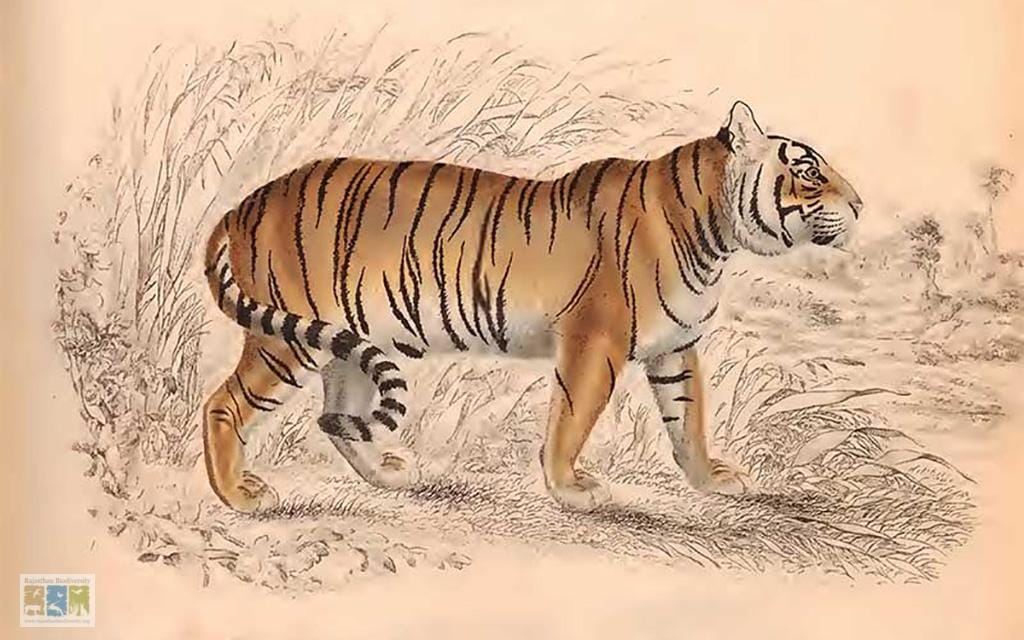
Cover Photo Caption & Credit: An illustration of a tiger at the edge of some tall grass from, The Edinburgh journal of natural history and of the physical sciences, with the Animal kingdom of the Baron Cuvier published in 1835





 Dr. Dharmendra Khandal (L) has worked as a conservation biologist with Tiger Watch – a non-profit organisation based in Ranthambhore, for the last 16 years. He spearheads all anti-poaching, community-based conservation and exploration interventions for the organisation.